
Hello, Zooniverse!
As you may know, in September 2024 we introduced a new community-building feature on Zooniverse – Groups. This new feature allows anyone who is registered on Zooniverse to stay connected and track collaborative achievements with friends and family, fellow science enthusiasts, educational groups, and more. We made it easy to track the number of your classifications and the time you have contributed and see which projects trend within your group. Read more about Groups in this Zooniverse blog post from 17 September 2024.
We were curious to see how the Zooniverse community was embracing this new feature. By late October, we began exploring – and discovered many wonderful groups. One of them really stood out: in just one month since the launch, this group of seven Zooniverse researchers has contributed nearly 22 work weeks’ worth of classifying time! The title of the group was special, too: PSR J0737-3039.
Intrigued and inspired, we reached out to the group to hear their story firsthand. A series of wonderful online conversations followed, and we are happy to share this story of dedication and connection through people-powered research.
Who came up with the idea of this group?
Meet Antonio Pasqua, an Italian astrophysicist, the creator and administrator of the PSR J0737-3039 group:

“My real name is Antonio Pasqua, my nickname in Zooniverse is Barbalbero – it is my favourite character in “The Lord of The Rings”.”
Antonio graduated from the University of Manchester, UK, with a degree in astrophysics. He usually teaches physics and mathematics and is involved in research when it is possible. His favourite project is Einstein@home: Pulsar Seekers:
“I hope we have information about discoveries soon. I contributed to the discovery of exoplanets, asteroids and supernovae, and I wish to complete my set of discovered objects with at least one pulsar.”
He named the group PSR J0737-3039, after the most peculiar pulsar system – a double pulsar, which was discovered by an international team led by the Italian radio astronomer Marta Burgay.
What motivates the group?
Curiosity and love for people-powered astronomy research!
Antonio, whose work bridges teaching and research, feels that sharing scientific discoveries with fellow enthusiasts is an incredible motivator:
“I am trying to have contacts with people who are experts in different areas of science in order to improve my skills. Most of the people in the group are Italian. My hope is also to spread citizen science in my country and make it more popular.”
One thing that unites the PSR J0737-303 group members is fascination with astronomy and astrophysics. This is how Katja (ZooniverseFanKat), who lives in Germany, discovered Zooniverse:
“I have learned about citizen scientist projects from a TV documentary about astrophysics. I really like astrophysics and astronomy. So I was interested to help and so I have started to search for it on the web. That’s how I found Zooniverse. First I thought, I would love to search for new comets and such, but I’ve ended up searching for pulsars at the project Einstein@Home: Pulsar Seekers. It was a recently started project at the time, when I came to Zooniverse and very easy to understand and classify. It’s still my main project, but I try other projects from time to time.”
Pietro Maiorana (Pietro_Maiorana) is a dedicated citizen scientist who contributed to a discovery highlighted in the article “Citizen Scientists Discover ‘Asteroid in a Cometary Orbit’: 2010 MK43 Has a Comet Tail”. This achievement stemmed from his work on Active Asteroids, a project aimed at identifying asteroids in our solar system that contain water. Pietro is passionate about all the opportunities Zooniverse presents:
“It’s an amazing platform where I can participate in genuine research across various fields of study, even though I’m not a scientist! The best part is that I can do it all from the comfort of my home, in my spare time, without worrying about schedules or travelling.”
Sauro Gaudenzi (assodicuori on Zooniverse) explains:
“I personally like astronomy and astrophotography (I am an amateur astronomer and astrophotographer). I am doing it because I like research in the astronomical field, even for small personal satisfactions in the sense that one day I can say: “I discovered this subject together with other citizen scientists”, but I also do it to help NASA and the astronomical community in my own small way.”
For Ciro Sirio Perrella (Sirius97) this work is about a childhood dream come true: “Ever since I was a child, I have always had a great love for astronomy. Life has led me to do a completely different kind of work, but making a concrete contribution to scientific research has always continued to be a great aspiration of mine. Zooniverse is a project that not only allows you to do this, but also offers opportunities to exchange and compare notes with people who cultivate the same passions and ambitions as you, to hear about their experiences, to share your own.”

The group doesn’t have any formal rules of participation. Virgilio Gonano (Wirg78), another member of the group, who lives in Italy and has a degree in geological sciences, explains:
“No rules except perhaps good manners. For me, cheer for other people’s successes and banish negative feelings such as envy and jealousy”.
Do the group members know each other outside of Zooniverse?
Not really. Or, at least, they didn’t prior to working together on Zooniverse projects.
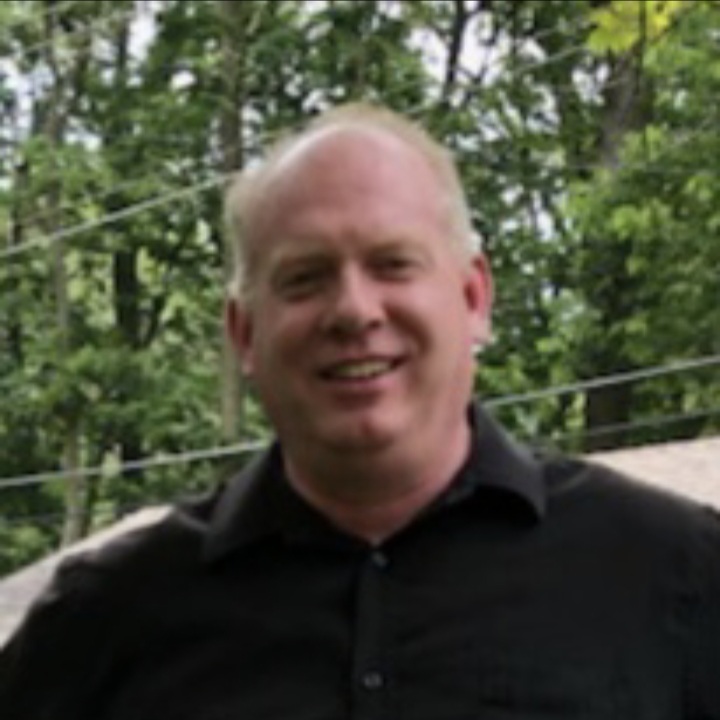
Nathan Bell (nathancbell) is an environmental scientist from Indianapolis, Indiana (USA) and one of the active PSR J0737-3039 group members. He joined Zooniverse in 2010, his favourite projects being Galaxy Zoo, Dark Energy Explorers, Einstein@Home: Pulsar Seekers, Disk Detective, Backyard Worlds: Cool Neighbors, Exoasteroids, The Daily Minor Planet, and Active Asteroids. He is currently up to approximately 553,000 total classifications. The new group is a way for him to work alongside people with similar interests:
“I think I met Barbalbero about a year ago through the Einstein@Home: Pulsar Seekers project by responding to several of his notes on various subjects through the project’s Talk feature. Barbalbero later sent me a direct email message through Zooniverse so that we could learn more about one another and our interests in Zooniverse and other citizen scientist projects. I may have also responded to other team members’ subject notes on various Zooniverse projects, but I can’t remember. I think Barbalbero contacted each team member to ask if they wanted to be part of the team. I don’t know any of the team members outside of Zooniverse.”
Antonio Pasqua started networking with other volunteers on Zooniverse well before Groups feature was introduced:
“I am active in different projects and I noticed some people working quite well and I decided to contact them in order to share ideas, expertise and opinions about projects themselves and science in general.”
Pietro Maiorana has previously been a part of this informal collaboration:
“I know about other member of this group through the information they share in the talk sections of various projects they participate in. For example, the user Wirg78 is someone I admire greatly for his Zooniverse journey. Also Italian and a passionate astronomer, he has achieved significant results in various research efforts, earning numerous mentions in prestigious publications. Recently, an asteroid was officially named after him in recognition of his dedication to The Daily Minor Planet, both as a classifier and as a conversation moderator.”
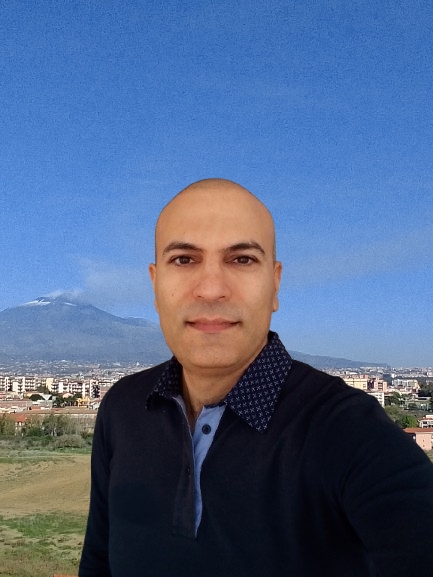
Cledison Marcos da Silva is a Brazilian amateur astronomer and holds a degree in Pedagogy and Physics, and a postgraduate degree in Teaching Astronomy and Natural Sciences. His studies are related to young and cataclysmic stars. He has been a part of this informal group of citizen scientists for a while now:
“We’ve done the same thing before, we’ve classified on the same Zooniverse projects. Some of us contribute to projects that other members don’t, but in the vast majority of projects we’re together. For my part, the goal is to contribute together to citizen science. I have already shared some discoveries with some members of the group.”

The group has provided a new way to connect and exchange knowledge for Antonio Pasqua and his fellow volunteers:
“We did not know each other before, but now I am becoming friends with some people from this group, because we send each other messages and info quite often. And it is a pleasure to get to know every member of the group because they are very good people and wonderful volunteers.”
Everyone is welcome to join PSR J0737-3039 group
Yes, this is right. Anyone, who is interested, can join the PSR J0737-3039 group. Just contact Antonio Pasqua and ask him to send you an invitation! To do this, sign into your Zooniverse account and go to Messages from your home page. Enter @barbalbero as the addressee.
Or you can create your own group!
It is very easy to do: just go to “My Groups” on your homepage at https://zooniverse.org and click on the “Create new group” link. Make sure that you are a registered user, you are logged in and your email address is confirmed. While you do not need a registration to classify on Zooniverse, it is required if you want to create and manage a group.
Why would you need your own group?
Imagine exploring Zooniverse projects with a group of fellow enthusiasts, with your family and friends, with your colleagues or with your class. Who knows what you’ll discover together?
In the words of Ciro Sirio Perrella: “The possibility of creating groups on Zooniverse is really nice! It allows us volunteers to get to know each other better and have the beautiful common goal of participating in scientific research!”
Katja finds the group motivating: ““The group helps me to compare how much I have done and what other group members have done. It motivates me to do more, when I have time. It is also an inspiration for new projects to try and participate in.”
Pietro Maiorana says that the new feature makes his research on Zooniverse more efficient: ”Thanks to shared statistics, I can monitor project progress and see where I can be most helpful. For instance, when a paused project uploads new data, I can notice it from updated group statistics showing that other members have resumed classifying. This helps me know when to start classifying again in a project of interest to me.”
Cledison Marcos da Silva, who is a qualified educator, believes the group feature has special value for teachers and students: “I think groups are very useful in many ways. Groups of friends can contribute to projects together, teachers can create groups with their students and see which projects they are working on, and Zooniverse scores can be counted. There are many uses for this and this should be encouraged for students and teachers who use Zooniverse in their classes and educational projects, now also with the availability of the volunteer certificate.”
Just go for it, says Virgilio Gonano: “With perseverance, patience and tenacity you can achieve many goals such as being co-authors of scientific articles and co-participants in exciting discoveries (I speak from direct experience). If you can, try to get along and form a group… You can find another family.”
Need help setting up a group? Contact the Zooniverse team at contact@zooniverse.org and we will be happy to help!
Written by Alisa Apreleva
 Daily Zooniverse