
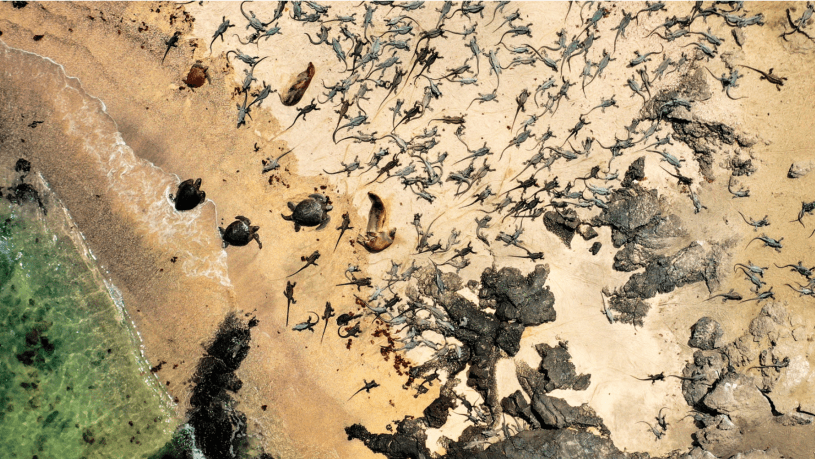
A new study in Nature’s Scientific Reports shows that citizen scientists can reliably count endangered Galápagos marine iguanas from drone images, offering a fast and cost-effective tool for wildlife monitoring.

Through the online project “Iguanas from Above”, hosted on the Zooniverse.org platform, over 13,000 volunteers analysed almost 58,000 images collected across seven islands of the archipelago. With each image being independently reviewed at least 20 times, the project amassed over 1.3 million classifications. Evaluations of the resulting data show that — when five or more volunteers independently spotted an iguana — their accuracy matched expert counts with over 90% reliability. This work shows that citizen science can produce high-quality data, even for difficult tasks like counting rare and cryptic animals on remote coastlines.
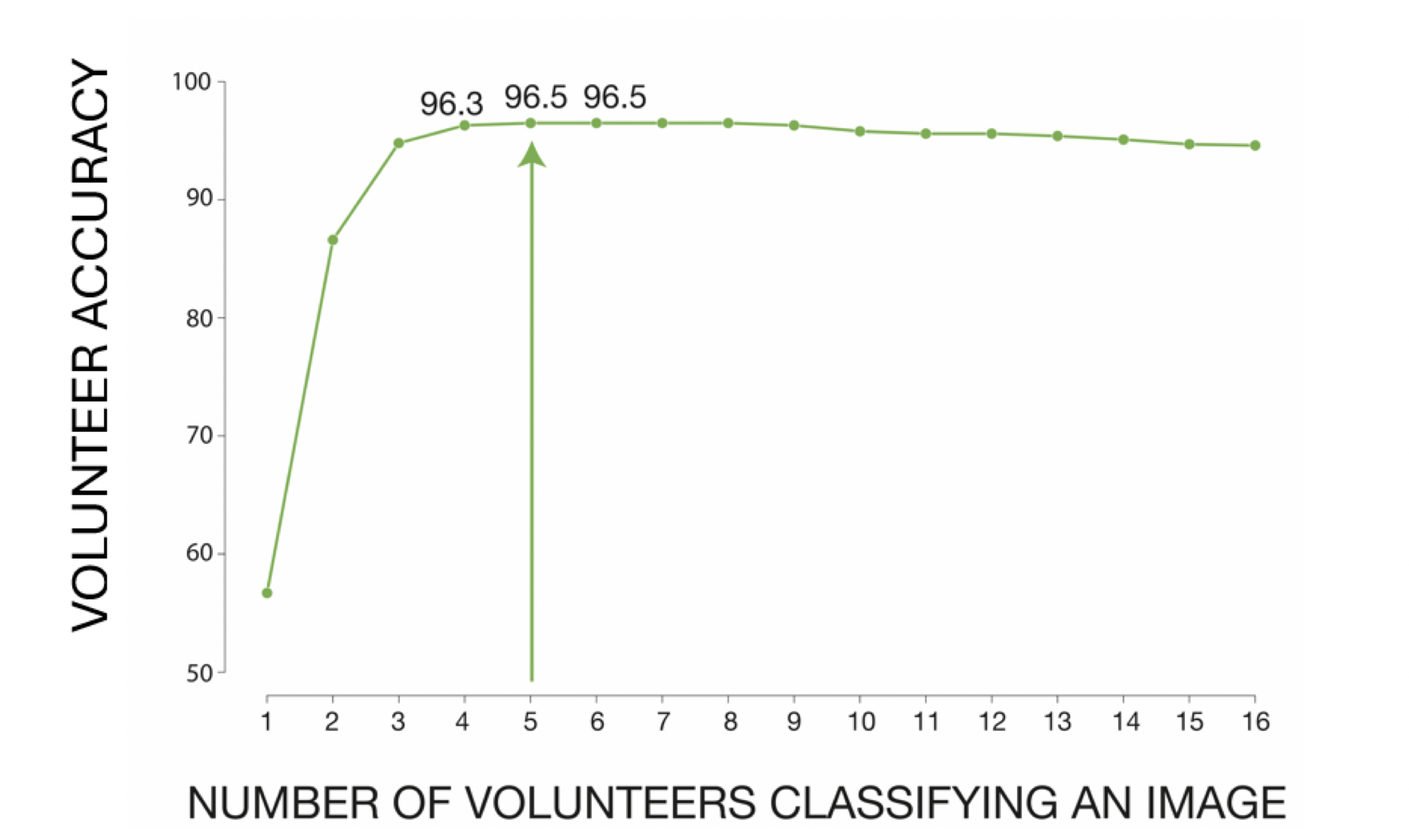
The central goal of the project — expected to be complete in early 2026 — is to publish the first detailed census count of the entire marine iguana species, thereby greatly aiding in the effective conservation of this unique seagoing lizard. A further future plan is to develop a Machine Learning-based approach for iguana counting, but preliminary work has shown that — for the time being at least — online volunteers are simply far better at this task.
To learn more, visit: www.iguanasfromabove.com or go to https://tinyurl.com/mrx2dvdn to help count.
Media contact:
Dr. Amy MacLeod, Project Lead at Iguanas from Above
Institute of Biology, University of Leipzig
 Daily Zooniverse