

Many Zooniverse-themed papers have been published in the pages of Monthly Notices of the Royal Astronomical Society (MNRAS) over the years. A recent article in Astronomy & Geophysics (A&G), the RAS Members magazine, celebrates this connection between the RAS and citizen scientists.
The article highlights, in their own words, the views of various authors on how they got involved in their Zooniverse projects; what they enjoy about them; and what they see for the future.
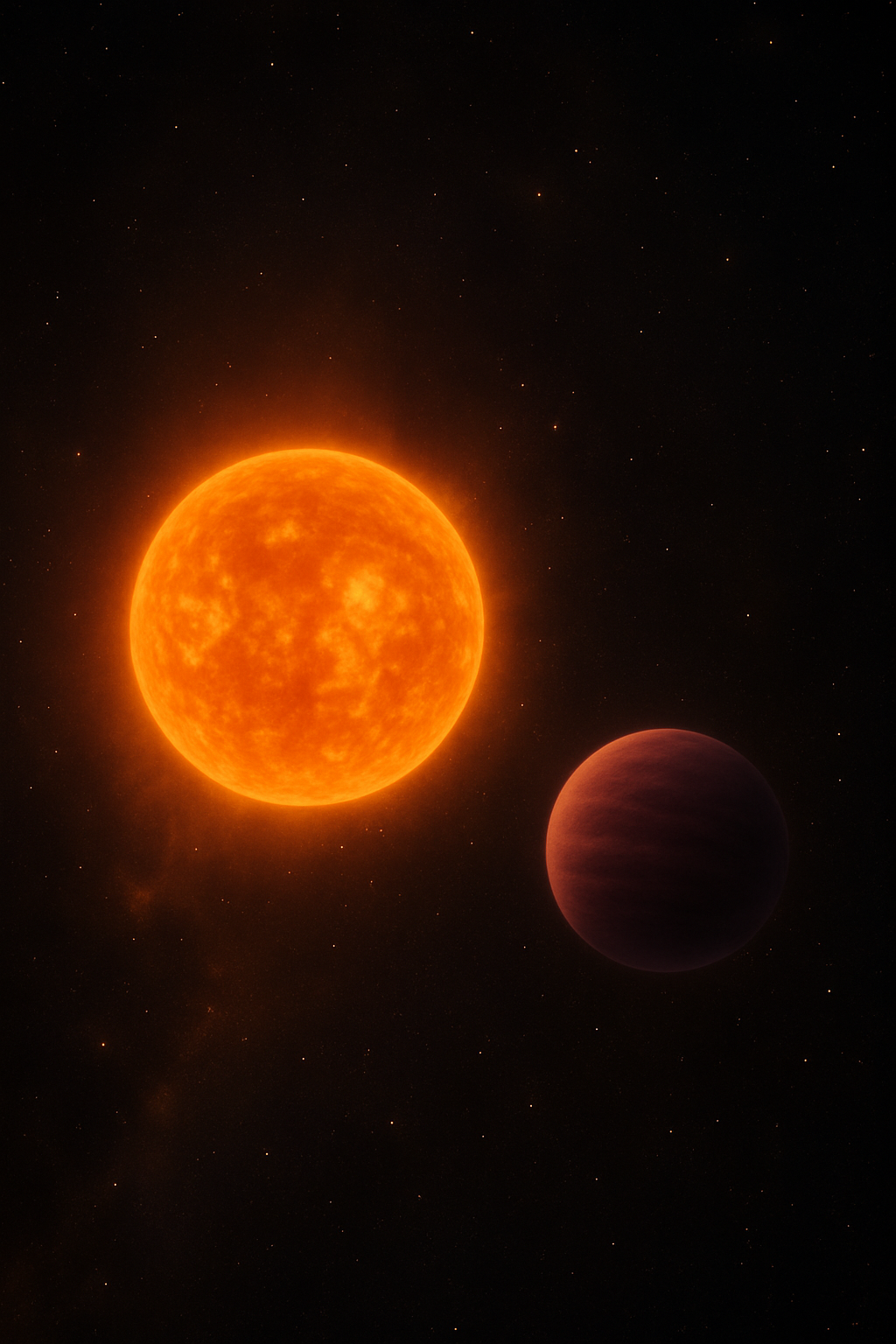
For instance, Michiharu Hyogo, of the Disc Detective project, speaks about the process that led to his first author paper, “Unveiling the infrared excess of SIPS J2045–6332: evidence for a young stellar object with potential low-mass companion”, despite having left academia, and how and why he has since become involved in a second project, Backyard Worlds: Planet 9.
Tom Killestein and Lisa Kelsey share how Lisa’s interest in public engagement from a young age and Tom’s machine-learning goals came together in the Kilonova Seekers project, described in their paper “Kilonova Seekers: the GOTO project for real-time citizen science in time-domain astrophysics”.
For Andrew Norton, citizen science provided a perfect opportunity to explore an extensive dataset, originally created to search for extrasolar planets, for information on variable stars. He is second author on the paper “SuperWASP variable stars: classifying light curves using citizen science” led by his then student, Heidi Thiemann.
A large number of Galaxy Zoo papers have been published in MNRAS over the years. For example, there is “Galaxy Zoo: 3D – crowdsourced bar, spiral, and foreground star masks for MaNGA target galaxies” by Karen Masters and colleagues, using human pattern recognition to guide analysis of complex internal structures in galaxies; “Galaxy zoo builder: Morphological dependence of spiral galaxy pitch angle” by Timothy Lingard and colleagues, featuring a combination of human-computer discovery; and “Galaxy Zoo DESI: large-scale bars as a secular mechanism for triggering AGNs” by Izzy Garland and colleagues, which used volunteer classifications as the basis for a machine-learning data set.
And there’s a lot more …
You can explore a special collection of recent Zooniverse-related articles published in MNRAS here https://academic.oup.com/mnras/pages/zooniverse_papers (all the papers are free to read) and you can find the A&G article, “People power in action”, here https://academic.oup.com/astrogeo/article/66/5/5.28/8268502 (free to read for three months from the date of this blog).
 Daily Zooniverse