
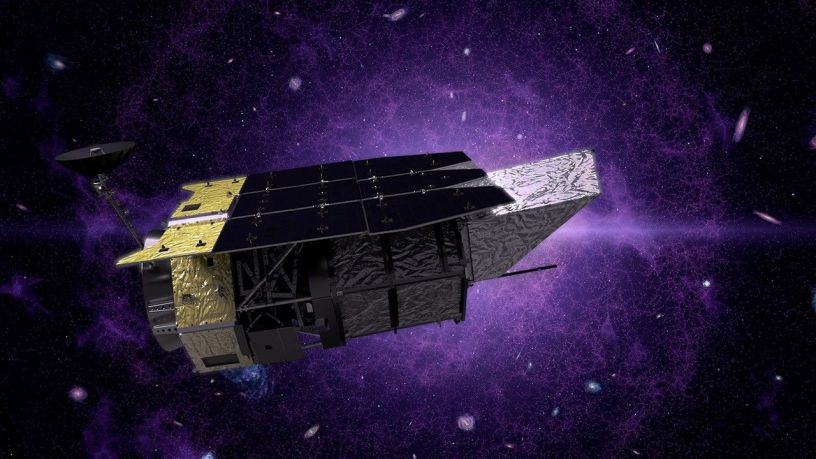
NASA’s Nancy Grace Roman Space Telescope has successfully launched, beginning its journey toward a new era of wide-field space astronomy.
Roman is NASA’s next flagship observatory, designed to survey vast areas of the universe in near-infrared light. Its observations will help scientists tackle some of the biggest questions in astrophysics: What is dark energy? How is dark matter distributed across the universe? How common are planets around other stars? Roman will also help advance techniques for directly imaging planetary systems.
And for Zooniverse, Roman brings some exciting possibilities.
Several future Zooniverse projects are already being developed to help researchers explore the enormous datasets Roman will produce. Galaxy Zoo is developing projects focused on galaxy shapes and spectra, while Planet Hunters is exploring how Roman data could contribute to future searches for exoplanets.
These are likely to be just the beginning. As Roman begins returning scientific data in 2027, we expect more Zooniverse projects to emerge, giving volunteers around the world opportunities to help explore Roman’s view of the universe.
A new telescope means new data, new questions, and an extraordinary number of things for humans to classify. We’re looking forward to seeing what Zooniverse volunteers will discover in Roman’s data.
You can learn more about the mission on the NASA Nancy Grace Roman Space Telescope website.
Image source: NASA


Hopefully, new projects will be created – Not like the Zooniverse’s TESS project which overwrote the Kepler project, even while its data was still being examined by people, similar to Carole Jordan (Cambridge).