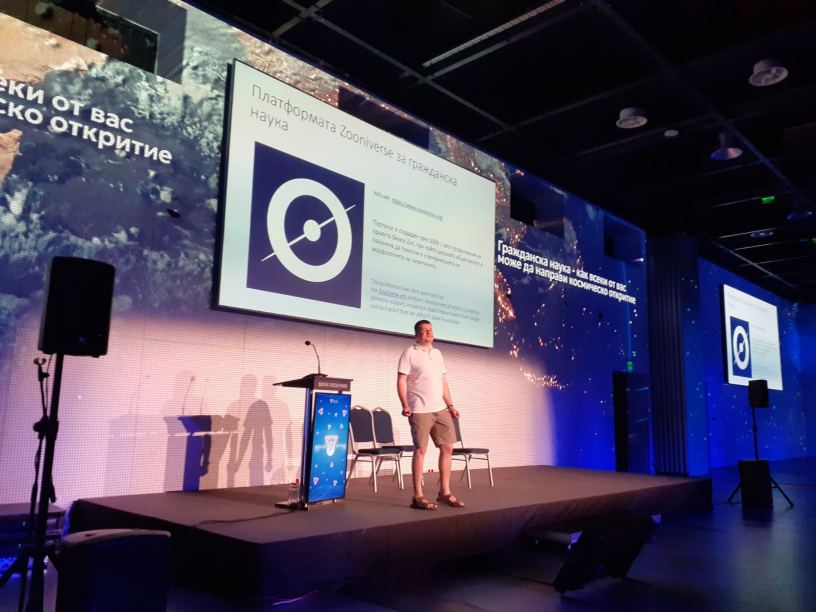
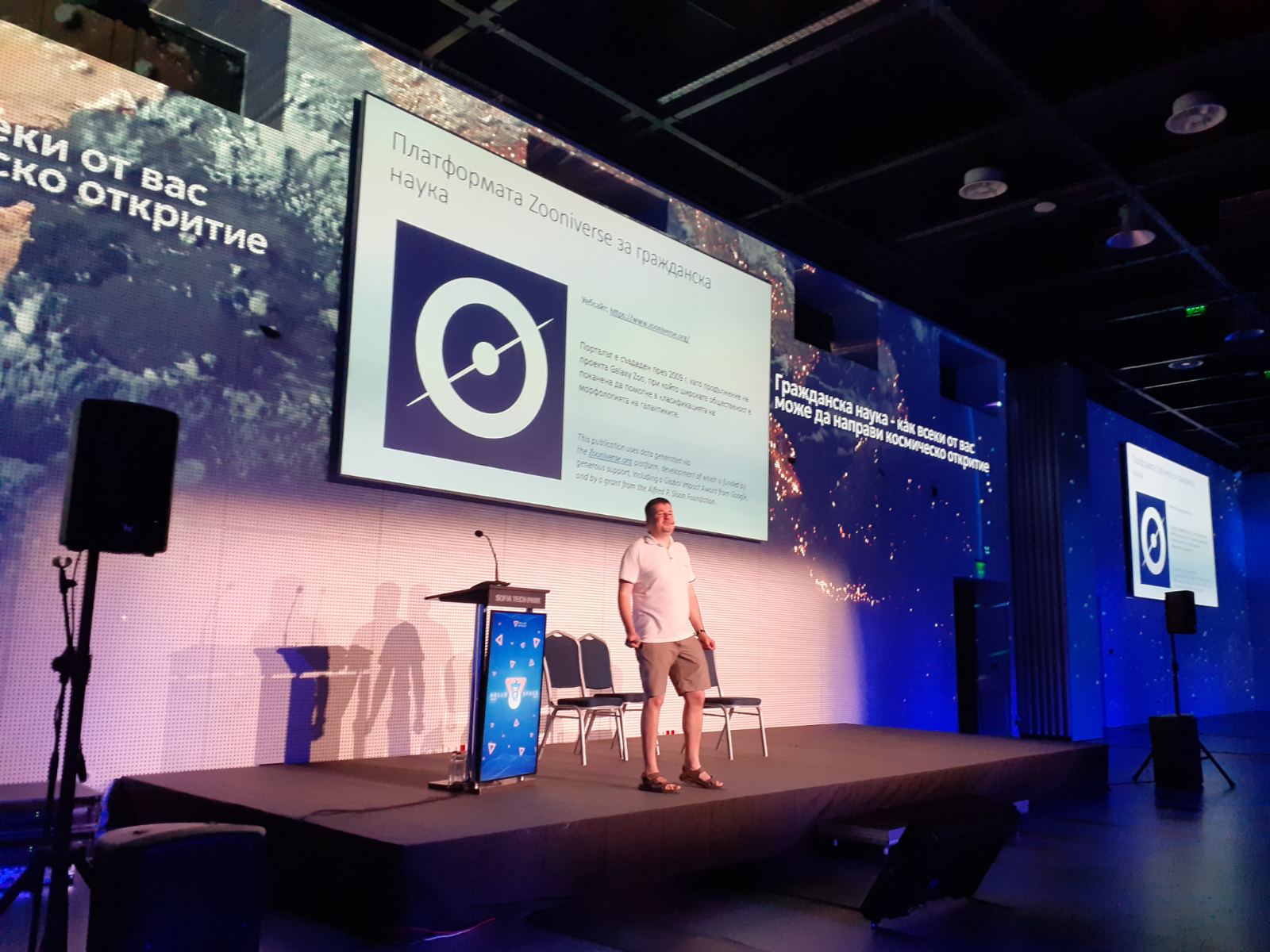
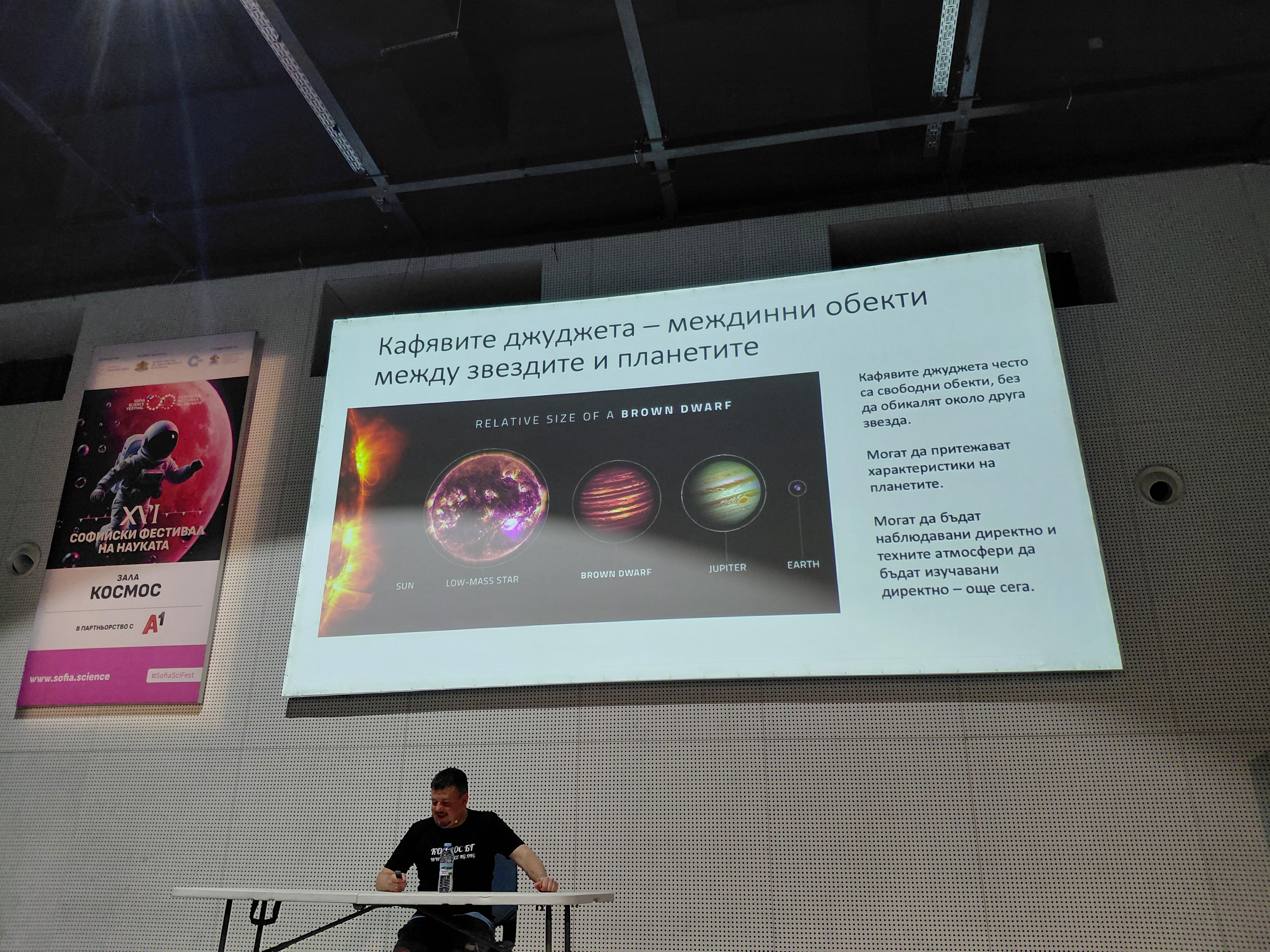
In our “Love Letters to Zooniverse” series we share wonderful stories from volunteers who have made Zooniverse a meaningful part of their lives, often contributing to projects and communities over many years.
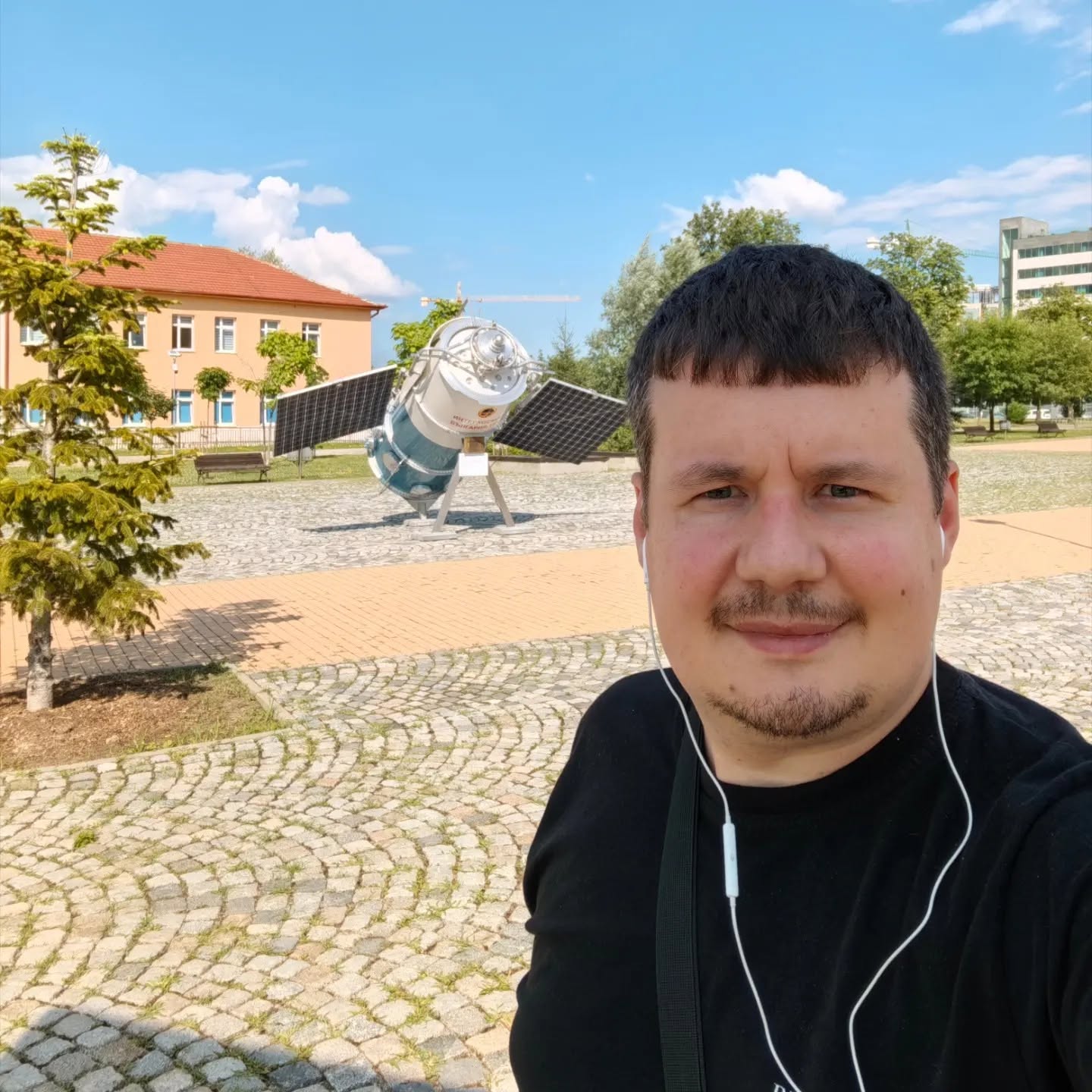
Here is one more, from Svetoslav Alexandrov, a 39-year-old molecular biologist and astrobiology researcher from Bulgaria. Since becoming an active Zooniverse volunteer in 2022, Svetoslav has contributed to discoveries across several astronomy projects, become a project moderator and scientific co-author, and even had an asteroid named after him.
My name is Svetoslav Alexandrov. I am 39 years old and I am from Bulgaria. This is the story of how I discovered Zooniverse and how this platform helped me fulfill my dreams.
When I was a child, I became interested in space exploration thanks to my grandmother, who told me stories about how Bulgarians followed the Sputnik 1 mission, how they tried to spot the first artificial satellite in history in the night sky, how they met Yuri Gagarin, and how the Lunokhod rovers explored the Moon. Some time later, my parents bought me The Usborne Children’s Encyclopedia by Jane Elliott and Colin King, and it immediately deepened my fascination with spaceflight.
However, growing up in an Eastern European country in the years following the fall of communism was not easy. I was frequently told that my country’s former achievements, including sending two cosmonauts into space, belonged to the past. I was advised that if I wanted to build a life in Bulgaria, I should pursue more practical and achievable dreams. As for space exploration, I was told that the only option was to leave the country and continue my education abroad. That seemed far too ambitious to me, so when I graduated from high school in 2005, I decided to pursue a career in molecular biology, hoping that one day I might be able to work in astrobiology.
Eventually, I earned a B.Sc. degree in Molecular Biology from Sofia University in 2009, an M.Sc. degree in Plant Physiology from Sofia University in 2011, and a Ph.D. in Plant Physiology from the Institute of Plant Physiology and Genetics at the Bulgarian Academy of Sciences in 2015. This eventually allowed me to work in the growing field of astrobiology in Bulgaria, including contributing to the country’s newly established Master’s program in astrobiology at Sofia University.
Yet it was Zooniverse that gave me the opportunity to work with data from real space missions and world-class observatories – something I never thought would be possible for someone with my background. I believe I first discovered the platform in 2020, but it was only after going through two difficult years in my personal life that I felt the need to find a new purpose and became truly committed to its projects.
In the summer of 2022, I joined the Cloudspotting on Mars, where I classified more than 700 subjects containing data from the Mars Climate Sounder instrument aboard NASA’s Mars Reconnaissance Orbiter. On March 30, 2023, I received a wonderful surprise from NASA’s Jet Propulsion Laboratory: a letter of thanks, mission stickers, and a mission pin. I was overjoyed because I truly felt like I was part of a real space mission.
But that was only the beginning.
Just two months later, in May 2023, I joined the newly launched Daily Minor Planet project, where I had the opportunity to discover new asteroids – something I had never imagined would happen to me. Only weeks after I joined, the project leaders contacted me. They told me that they are satisfied with the quality of my classifications, how much they appreciated my contributions on the discussion forums, and invited me to become a moderator.
I became deeply involved in the project, and in September 2023 another dream I had always considered impossible came true: I saw my name on NASA’s website when the project’s first results were announced.
However, the best was yet to come.
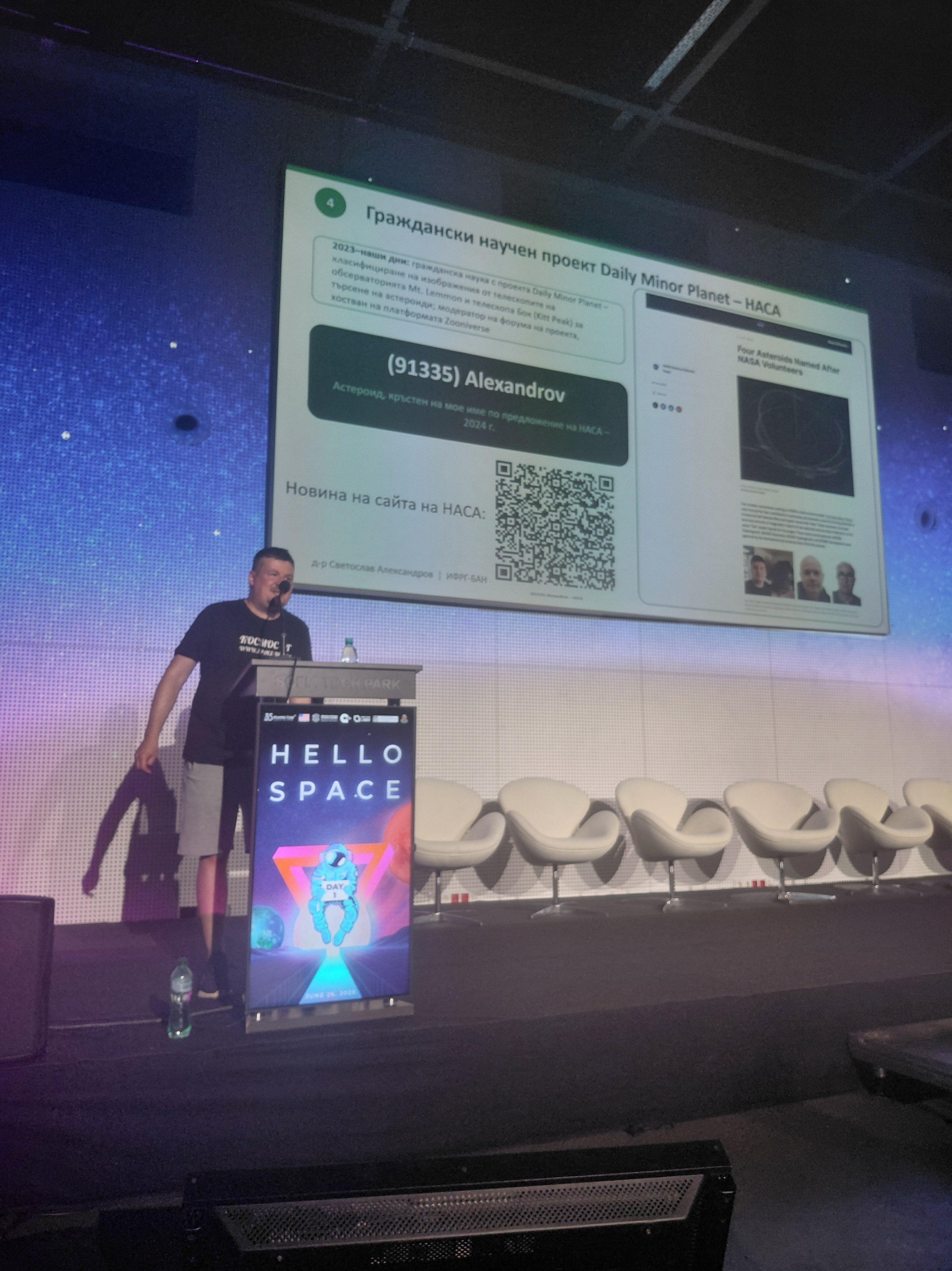
In the summer of 2024, the International Astronomical Union named an asteroid after me: 91335 Alexandrov, alongside asteroids named after three other Daily Minor Planet participants. Later that year, NASA published another feature about the project.
It was an extraordinary honor that I had never imagined would happen to me, and it is still something I am trying to fully comprehend. Even today, remembering those moments fills me with happiness.
In October 2024, I experienced another unforgettable moment. While riding a bus and taking one of my two sons to kindergarten, I classified images for the Kilonova Seekers project, where volunteers search for astronomical transients. Together with several other volunteers, I helped discover GOTO0650, a dwarf nova that is believed to have reached the rare final evolutionary stage of a cataclysmic variable, known as a period bouncer. The discovery was eventually published in Astronomy & Astrophysics, and several volunteers, myself included, were listed as co-authors.
The discovery attracted media attention, and I was even invited to be interviewed by The Wall Street Journal. The story of making an astronomical discovery while riding a slow bus through traffic using nothing more than my mobile phone resonated with many people.
Today, I continue to participate in Daily Minor Planet as well as Kilonova Seekers, where I contribute to the discovery of new astronomical transients on a regular basis. But these are not the only Zooniverse projects in which I have made scientific contributions.
Backyard Worlds: Cool Neighbors is dedicated to discovering brown dwarfs which relies on WISE/NEOWISE imagery with candidates pre-selected from CatWISE2020. I was fortunate to be part of the project’s first confirmed discovery, CWISE J133605.65+505330.9, together with several other volunteers, and we were all listed as co-authors on the first scientific paper describing the object (Robbins et al, 2024). In 2025, another paper by Wood et al. presented additional proper-motion discoveries, and I was again honored to be included as a co-author.
I also joined Eclipsing Binary Patrol, a project led by fellow Bulgarian researcher Veselin Kostov of the SETI Institute and NASA Goddard Space Flight Center. The project has already resulted in two scientific publications, and once again many volunteers, myself included, became co-authors thanks to our contributions to the discoveries.
Most recently, I contributed to the discovery of the near-Earth asteroid 2026 KS3 through the Daily Minor Planet project, as well as to a paper published in July 2026 by Singh et al. as part of the Active Asteroids project. The paper describes cometary activity observed in Jupiter-family Comet 2021 RK133. Thirty-three NASA citizen scientists, including myself, were acknowledged for their work on this object, representing countries including the United States, the United Kingdom, Germany, Italy, France, Russia, Poland, Portugal, Denmark, Greece, Mexico, Uruguay, China – and, thanks to my participation in this project, Bulgaria.
Back in 2020, I couldn’t have imagined that I would contribute to so many scientific projects, participate in genuine discoveries, publish scientific papers, or even have an asteroid named after me. Yet Zooniverse made dreams that once seemed impossible become reality.
I hope this letter inspires many more people to join the incredible projects hosted on the Zooniverse platform and encourages them to write success stories of their own.
Thank you, Zooniverse, for opening these doors and making these opportunities possible. I can’t wait to see what the future holds.